Scissor Lift or Boom Lift?
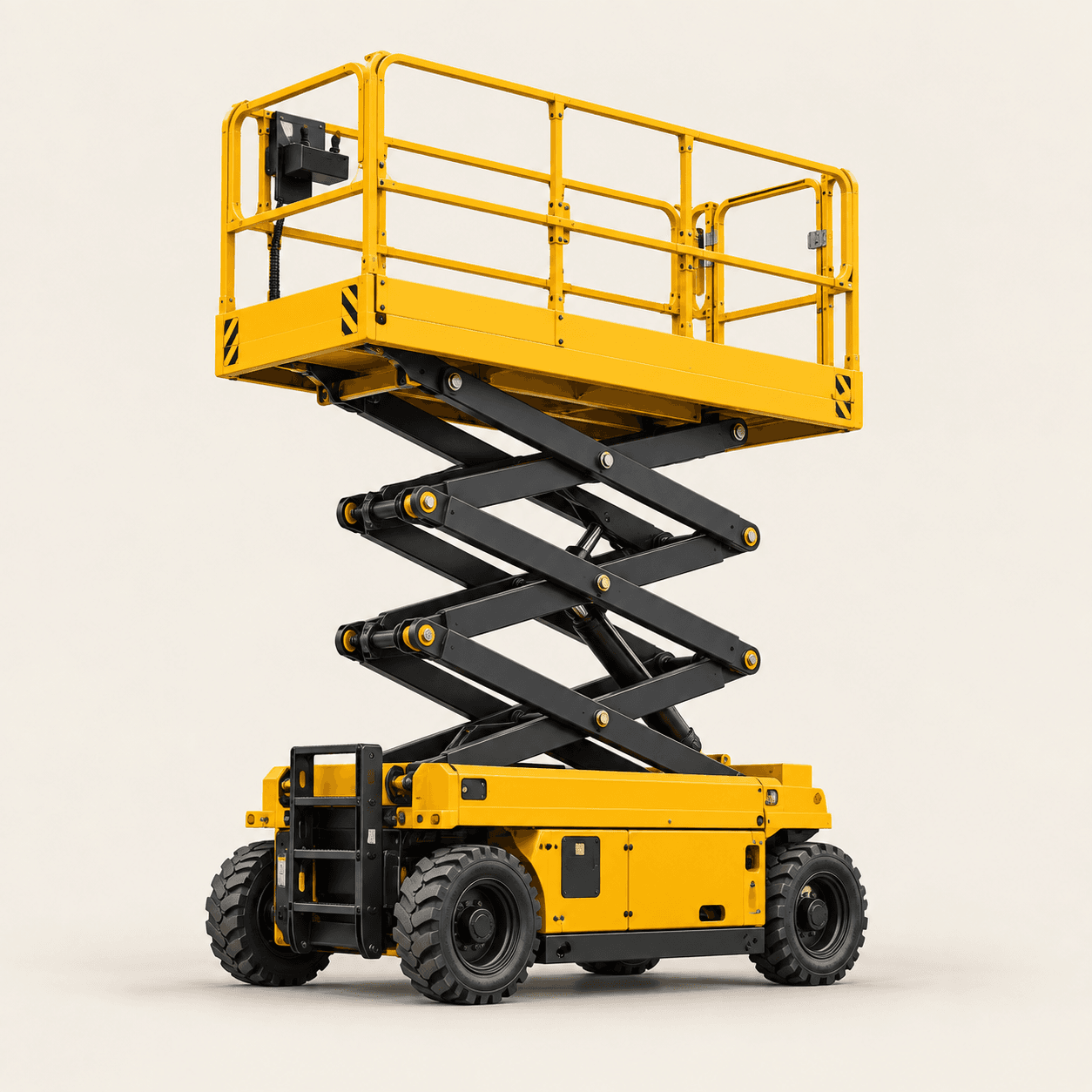
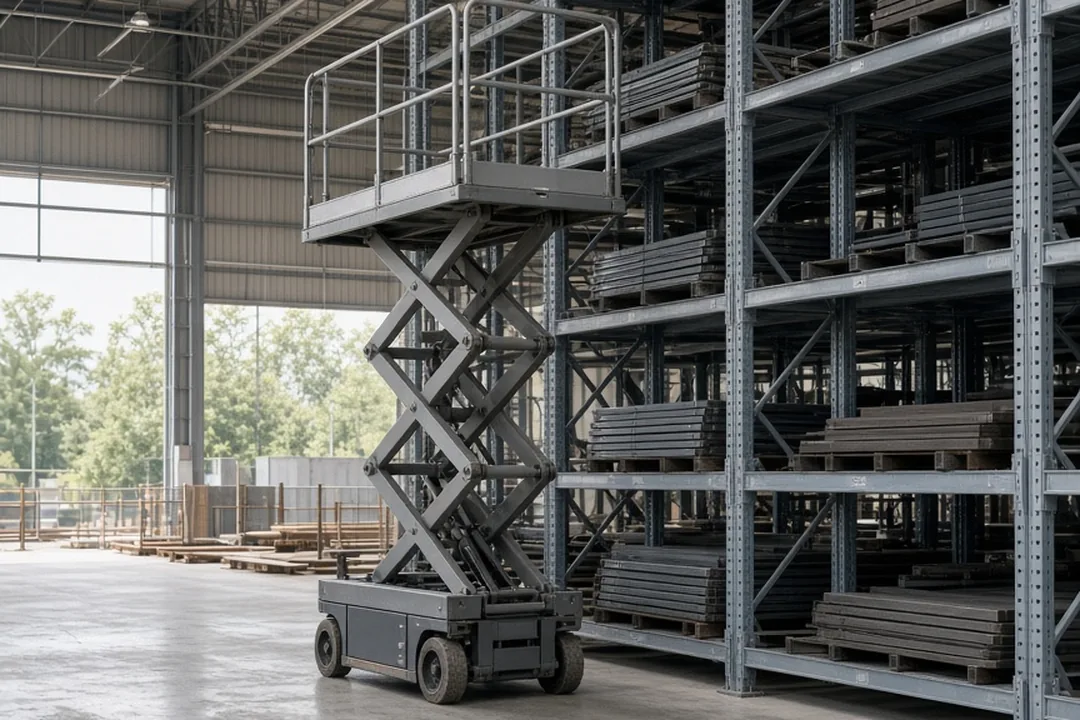
Best for: Scissor lift fits
- Work directly above the base on a flat platform
- Interior fit-outs, painting, MEP and racking
- Jobs that need deck space for tools and materials
- Sites where side reach past obstacles is not required
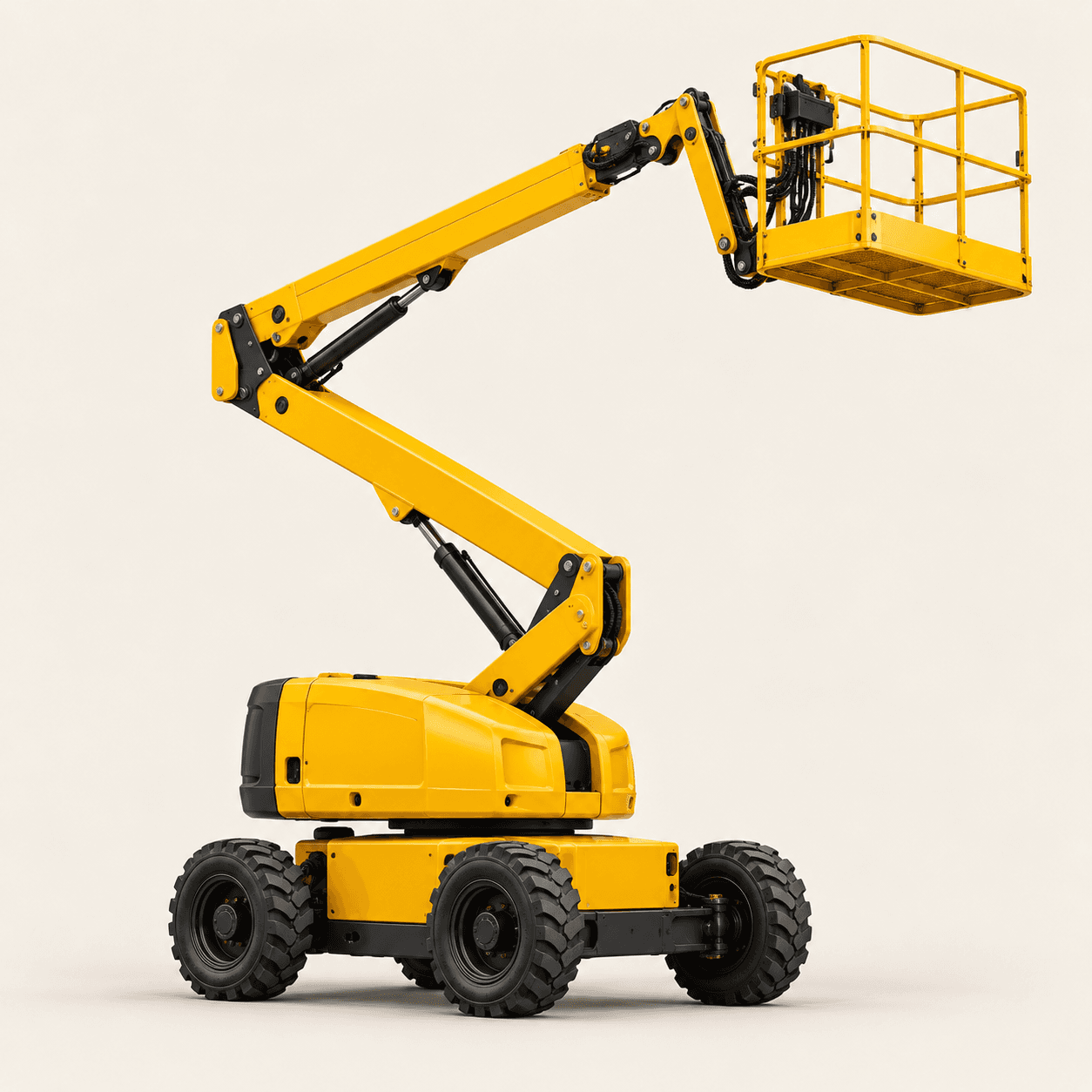
Best for: Boom lift fits
- Work that reaches up and out over obstacles
- Facade, roof-edge and atrium work
- Sites that need articulating or telescopic reach
- Jobs where a compact scissor cannot get close enough
If the work is straight overhead on a finished slab, start with a scissor. If you need to reach over a wall, trench or parked equipment, see how to choose a boom lift.
Platform Height, Capacity and Occupancy
Spec sheets list platform height and working height separately. Genie notes that U.S. working height adds 6 feet to platform height. Always size to the platform height you need to stand on, not the working-height marketing number.
| Example | Platform height (in / out) | Lift capacity | Width | Typical fit |
|---|---|---|---|---|
| Genie GS-1930 | 19 ft 3 in / 14 ft 8 in | 500 lb; 2 in / 1 out | About 30 in (2 ft 6 in) | Tight interior corridors, storefronts, light MEP |
| Genie GS-3246 | 32 ft 1 in / 22 ft | 700 lb; 2 in / 1 out | 3 ft 10 in | Higher interiors, warehouse work, more deck load |
Extension decks carry less. Both examples list 250 lb on the slide-out deck when extended. Keep heavy materials on the main platform and stay inside the load chart for the height zone you are using.
Width, Floor Loading and Ground Conditions
Measure doorways, aisles and elevator cabs before you order. The GS-1930 stows about 30 inches wide; the GS-3246 is 3 ft 10 in wide. Stowed height with rails up is about 7 ft 1 in on the GS-1930 and 8 ft on the GS-3246, with lower heights when rails are folded.
Floor loading matters on upper levels and podium slabs. Genie lists occupied floor pressure around 287 psf for the GS-1930 and 210 psf for the GS-3246 in the cited configurations. Share those figures with the structural engineer or GC when the slab has posted limits.
- Slab scissors use solid non-marking tires and pothole guards for firm, level floors.
- Gradeability figures on these models (25% stowed) apply to driving, not to working on a slope; follow the operator manual for slope limits when elevated.
- Rough, muddy or unfinished grades usually need a rough-terrain scissor or a boom lift instead of a slab machine.
- In cities such as Carrollton and Coppell, interior commercial work is common; confirm delivery into the building and elevator or hoist plans.
OSHA Rules: Scaffolds, Not Aerial Lifts
OSHA's August 1, 2000 interpretation letter states that scissor lifts are not covered by the aerial lift requirements in §1926.453. They meet the definition of a scaffold, so employers must follow the applicable Subpart L scaffold rules, including the mobile scaffold provisions in §1926.452(w).
Employees are not required to tie off when working from a scissor lift that has properly maintained guardrails, including when the platform extends beyond the wheelbase. That differs from aerial-lift practice, where §1926.453 requires a harness and lanyard attached to the boom or basket.
Training still applies. §1926.454 requires scaffold training by a qualified person covering electrical and fall hazards, falling-object hazards and load capacity. Keep the operator manual and the provider's familiarization on site.
Near overhead lines, Texas Health and Safety Code chapter 752 still applies: stay at least 6 feet from lines over 600 volts unless the operator has arranged de-energizing, relocation or barriers. See also utility locates before digging when the job mixes aerial work with excavation.
Before You Rent
- Platform height needed indoors and outdoors, and whether the work stays in one zone.
- Total weight of people, tools and materials, including anything on the extension deck.
- Door, aisle and elevator clearances; stowed width and rail height.
- Floor or ground condition, slope and any posted floor-load limits.
- Power: electric slab machines for interiors; confirm charging access on multi-day rentals.
- Operator authorization and the provider's familiarization before the first lift.
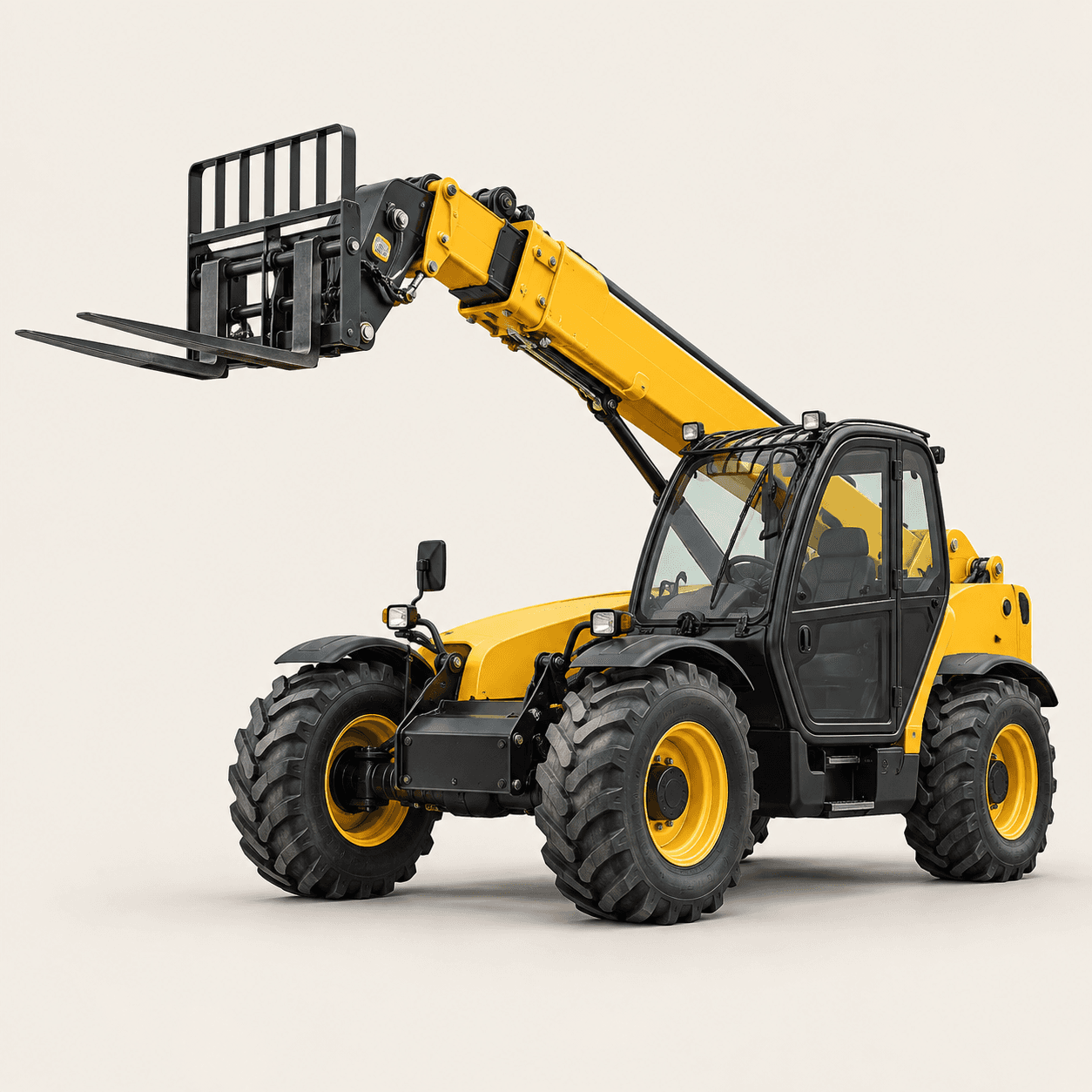
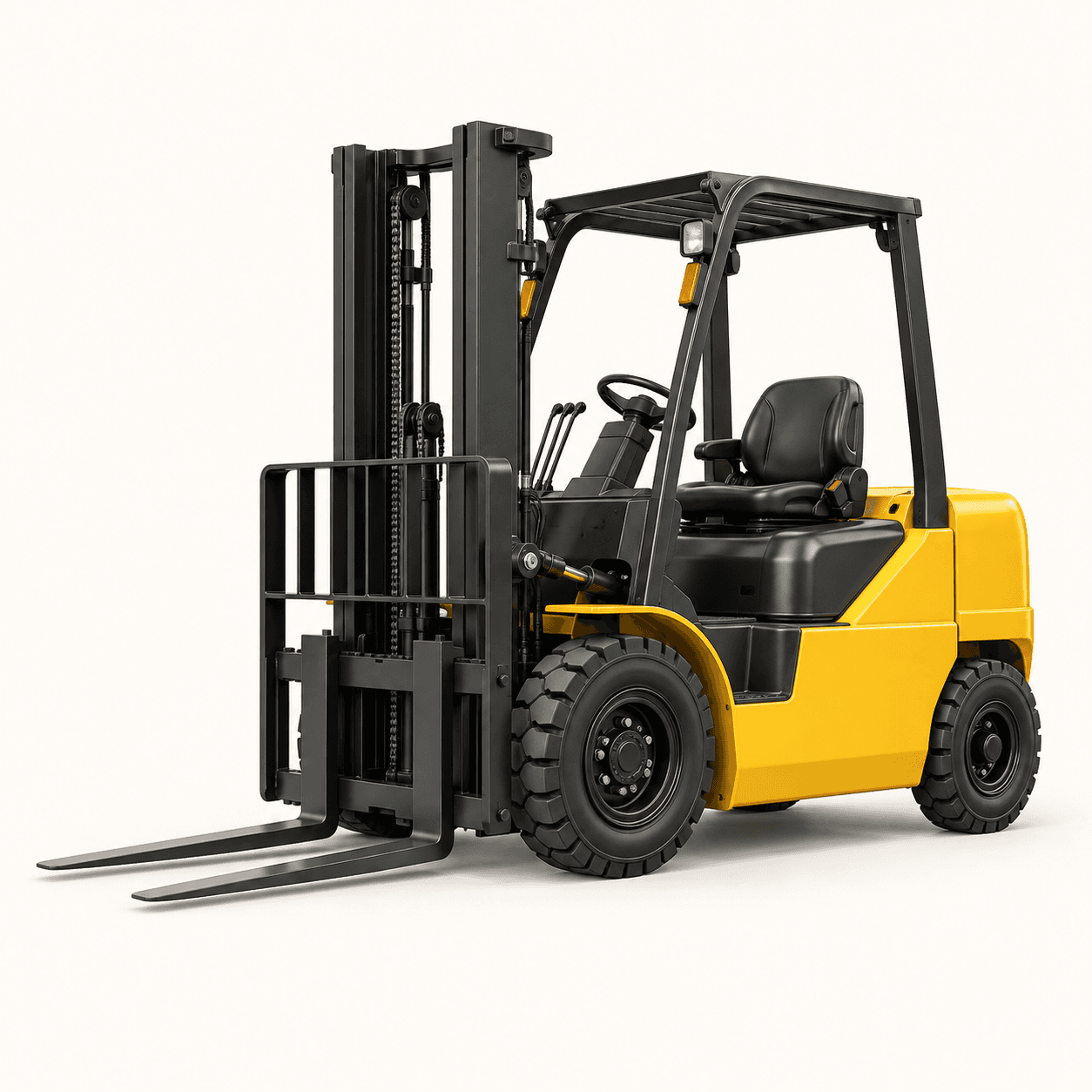
For a broader rental walk-through, see the equipment rental checklist. For material handling at height instead of people, see telehandler vs forklift.
Specifications are taken from manufacturers' published materials and can change. This guide is general information. Always follow the manufacturer's instructions, your rental provider's requirements and your jobsite's safety rules.