The Short Comparison
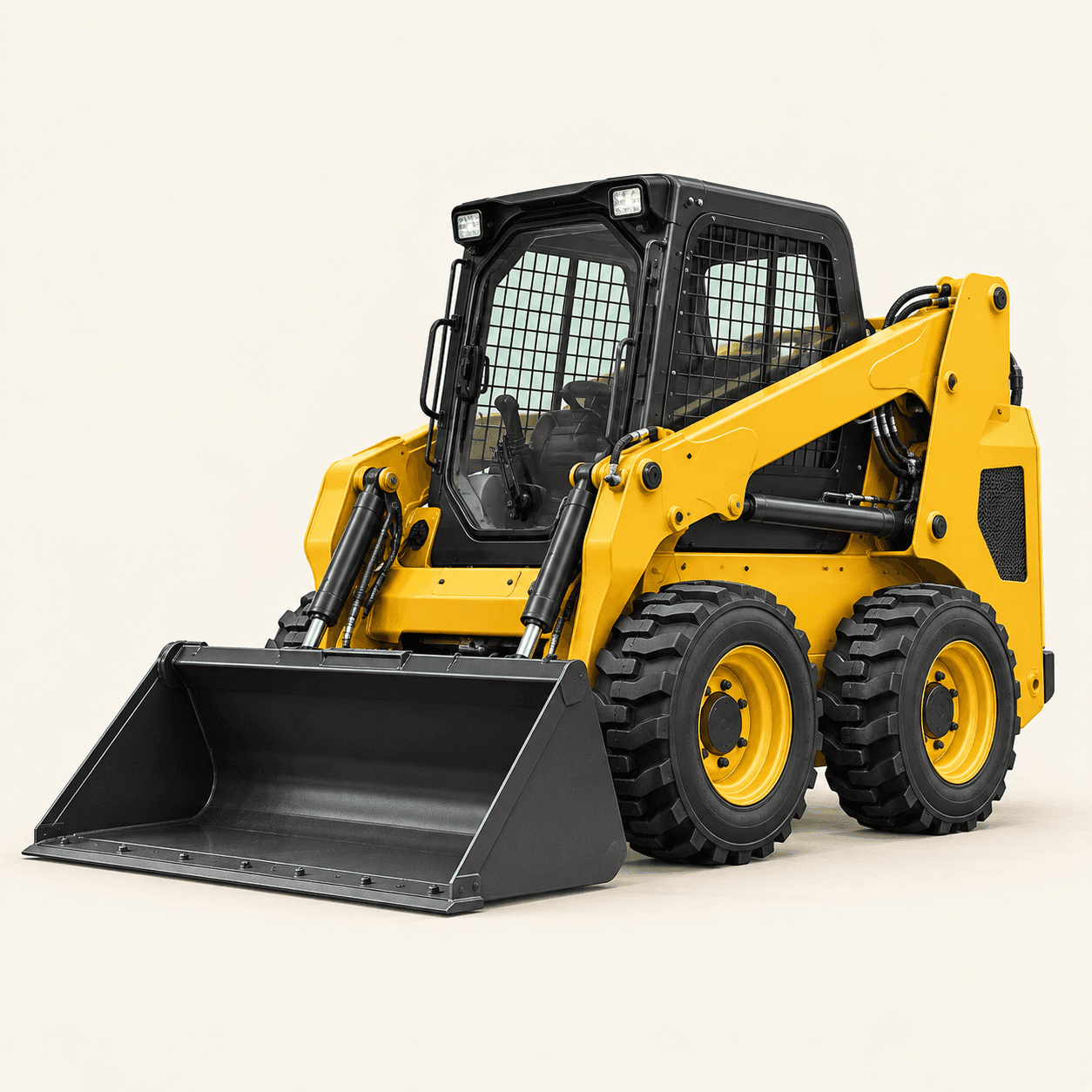
Best for: Skid steer
- Tight residential and infill lots
- Attachment work: forks, augers, brooms, grapples
- Small piles, backfill and cleanup
- Short carries inside the site
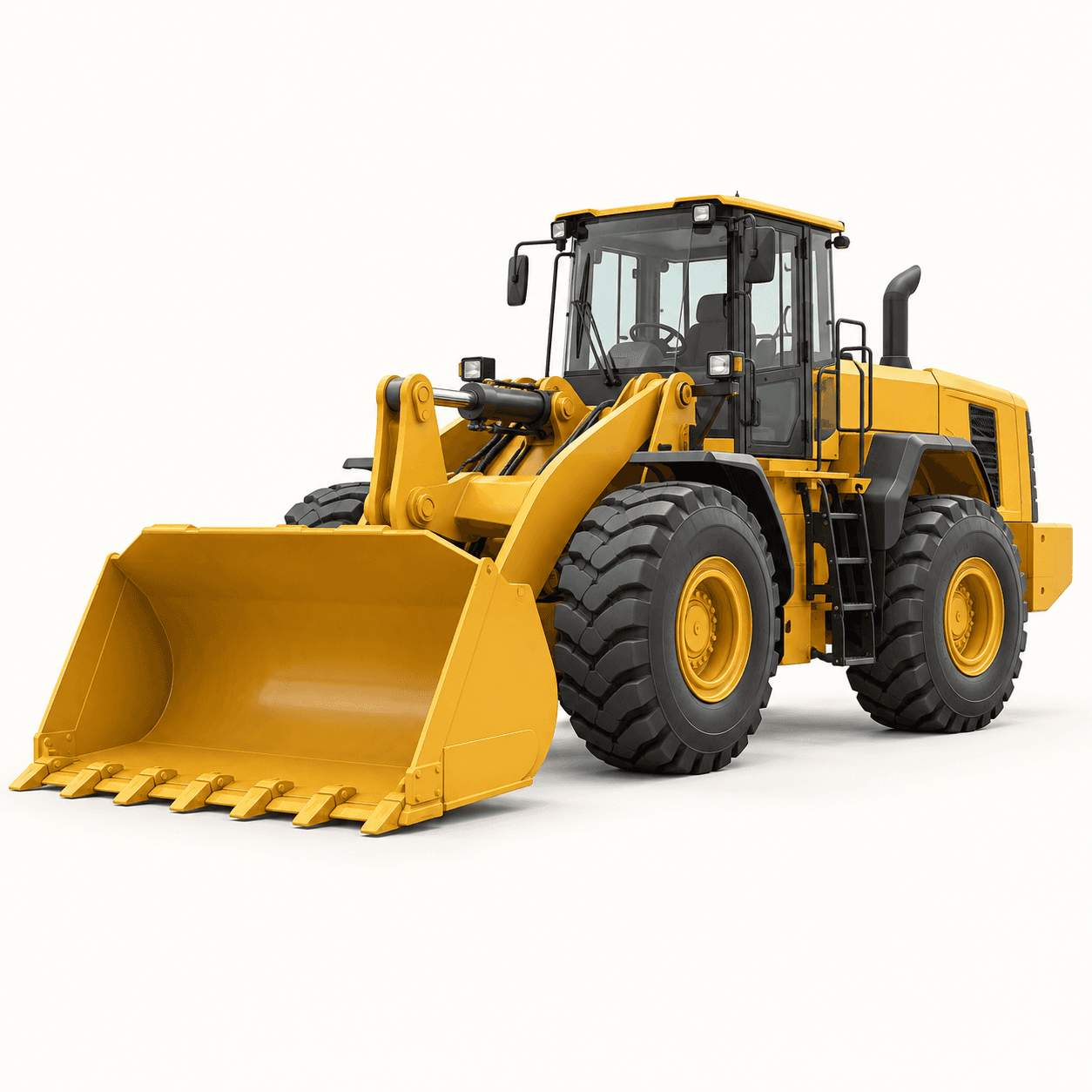
Best for: Wheel loader
- Stockpiles and truck loading
- Larger buckets and longer carries
- Firm, open yards and graded pads
- Hours of repetitive loading
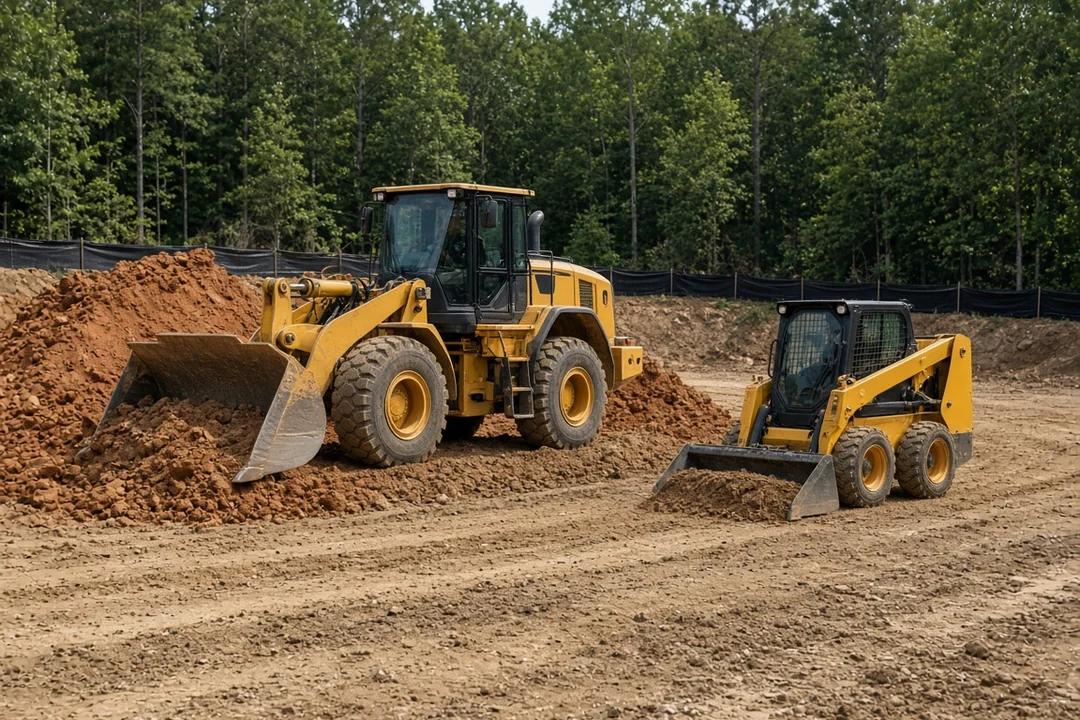
A skid steer earns its place where space is tight and the job changes during the day. A wheel loader earns its place when the same material moves in volume, over distance, into trucks. Many sites use both: a wheel loader on the stockpile and a skid steer at the edges.
Size Classes from Published Specs
| Example | Type | Operating weight | Capacity as published | Net power |
|---|---|---|---|---|
| John Deere 318 P | Skid steer | 6,542 lb | 1,945 lb rated operating capacity | 61 hp |
| John Deere 334 P | Skid steer | 10,264 lb | 4,000 lb rated operating capacity (with one standard counterweight set) | 114.7 hp net peak |
| John Deere 244 P | Compact wheel loader | 12,258 lb | 1.0 to 1.4 cu yd bucket | 71 hp |
| John Deere 344 P | Compact wheel loader | 19,533 lb | 2.0 to 2.6 cu yd bucket | 103 hp |
| John Deere 644 P | Mid-size wheel loader | 39,537 to 40,135 lb | 4.00 to 4.25 cu yd bucket | 227 hp |
The heaviest skid steer in the table weighs less than the smallest wheel loader. Between Deere's 318 P and its 644 P, operating weight rises more than sixfold, and that weight is what carries a bigger bucket without tipping.
Why Capacity Numbers Don't Compare Directly
Skid steer makers publish rated operating capacity, a weight the machine is rated to carry. Wheel loader pages usually lead with bucket volume in cubic yards. A cubic yard of wet clay and a cubic yard of mulch weigh very different amounts, so a bucket size alone doesn't tell you how much weight you're lifting.
- Start from the material: what it is, how much of it there is and where it goes.
- For a skid steer, compare the load you'll carry with the published rated operating capacity, and remember that attachments change it.
- For a wheel loader, ask the provider which bucket comes with the machine and what material it's sized for.
- If trucks are being loaded, match bucket size and dump height to the trucks on the job.
Deere lists the 334 P's 4,000 lb rating with one standard counterweight set, a reminder that published capacity depends on configuration. Ask for the exact spec of the unit you'll get, not the model family.
Steering, Ground and Turning Room
A skid steer turns by driving the wheels on each side at different speeds, which lets it spin in its own length but drags the tires sideways. On turf, finished concrete or soft ground, that scuffing can leave a mess. Ground protection mats, a tracked compact loader or a wheel loader may be better choices on surfaces you have to restore.
Wheel loaders steer by articulating in the middle. Deere's Articulation Plus steering on its compact models combines 30 degrees of articulation with 10 degrees of rear-wheel steering for tighter turns, and Deere says it gives a higher full-turn tipping load without excessive articulation. A wheel loader still needs more room to turn and stage than a skid steer.
North Texas clay changes the answer after rain. On wet sites, tracked machines often keep working when tires can't; the site preparation guide compares compact track loaders for that reason.
Local Rules That Change the Loader Choice
City rules on spoil and grading often decide how much loader you need. In right-of-way work, Duncanville prohibits storing dirt or debris on traveled lanes or paved surfaces and requires excavated material to be removed the same day, and Farmers Branch requires debris and unused excavated material to be removed daily. A skid steer and a truck often cover that.
Larger earthwork brings permits first. Waxahachie requires grading and erosion control plans, inspected erosion controls and a letter of authorization before grading an acre or more, and Lancaster asks for an engineer-sealed erosion control plan with its grading permit. Once grading is approved, a wheel loader keeps stockpiles and trucks moving.
Safety Rules and Getting the Machine There
- OSHA 1926.602(a) covers loaders and similar earthmoving equipment. Specific rules for rubber-tired skid-steer equipment are reserved, so follow the manufacturer's manual and OSHA's general equipment rules.
- Seat belts are required on covered equipment that has rollover protection; operators should wear them.
- Bidirectional machines such as front-end loaders need a horn that can be heard over the site and is used as needed.
- Equipment with an obstructed view to the rear can't back up unless it has a working reverse alarm or someone signals that it's safe.
- Scissor points on front-end loaders that are a hazard to the operator during normal operation must be guarded.
Weight drives delivery. A machine in the 6,000 to 10,000 lb class and one around 40,000 lb need very different trailers, and Texas sets size and weight limits and permits for oversize or overweight loads. Ask the provider what the delivery truck needs for access, turning and unloading room.
Before You Rent
- Material type, volume and where it goes: on site, into trucks or off site.
- Site access: gate width, overhead clearance, turning room and surfaces to protect.
- Ground conditions after rain, and whether tracks make more sense than tires.
- Attachments needed, such as forks, grapple or broom, and their effect on rated capacity.
- Bucket supplied with the machine, and dump height for the trucks you'll load.
- Delivery: trailer type, unloading space and any City or ROW limits on staging.
For digging rather than loading, compare skid steers and mini excavators. For the finish work after the loader, see choosing compaction equipment.
Specifications are taken from manufacturers' published materials and can change. This guide is general information. Always follow the manufacturer's instructions, your rental provider's requirements and your jobsite's safety rules.