How the Two Machines Work
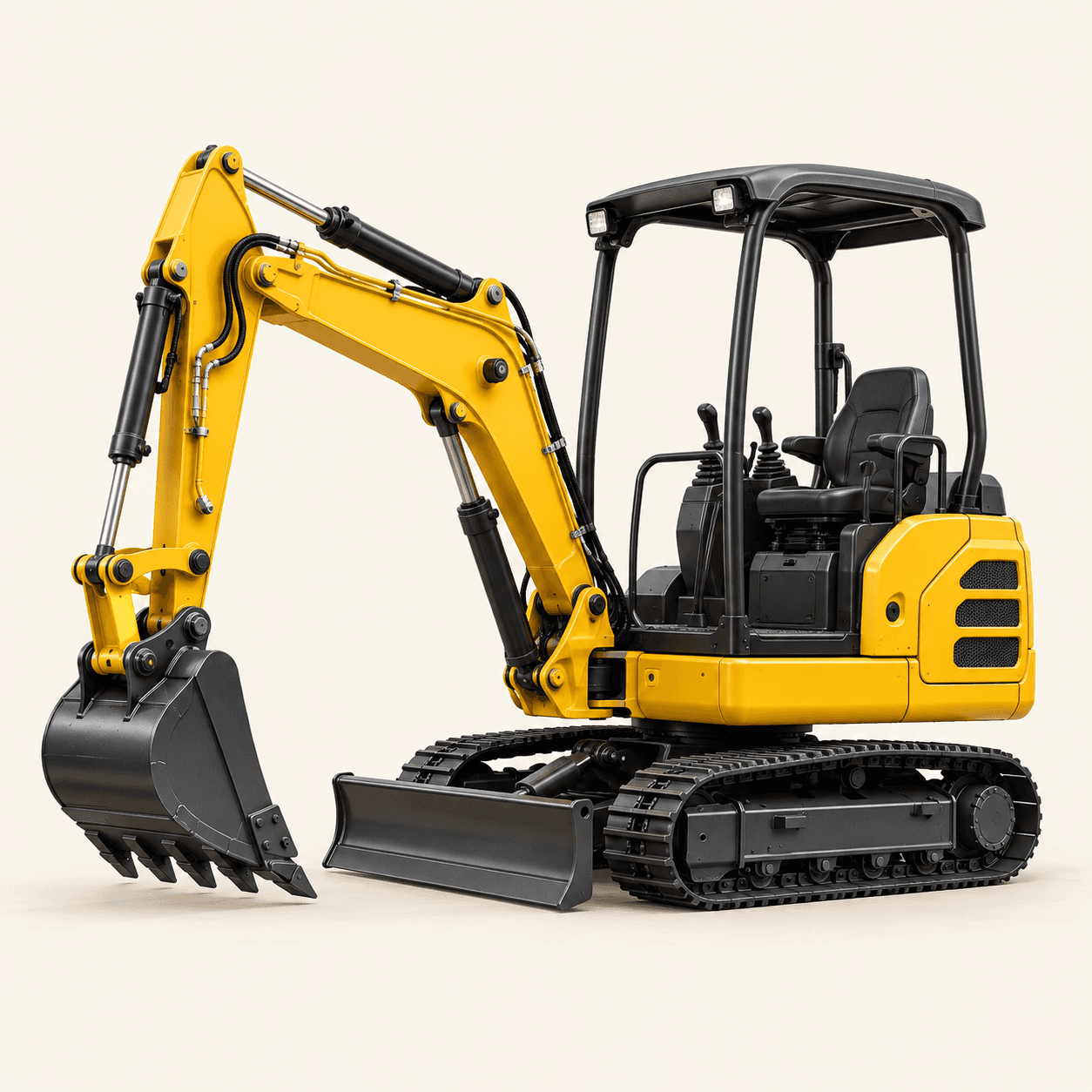
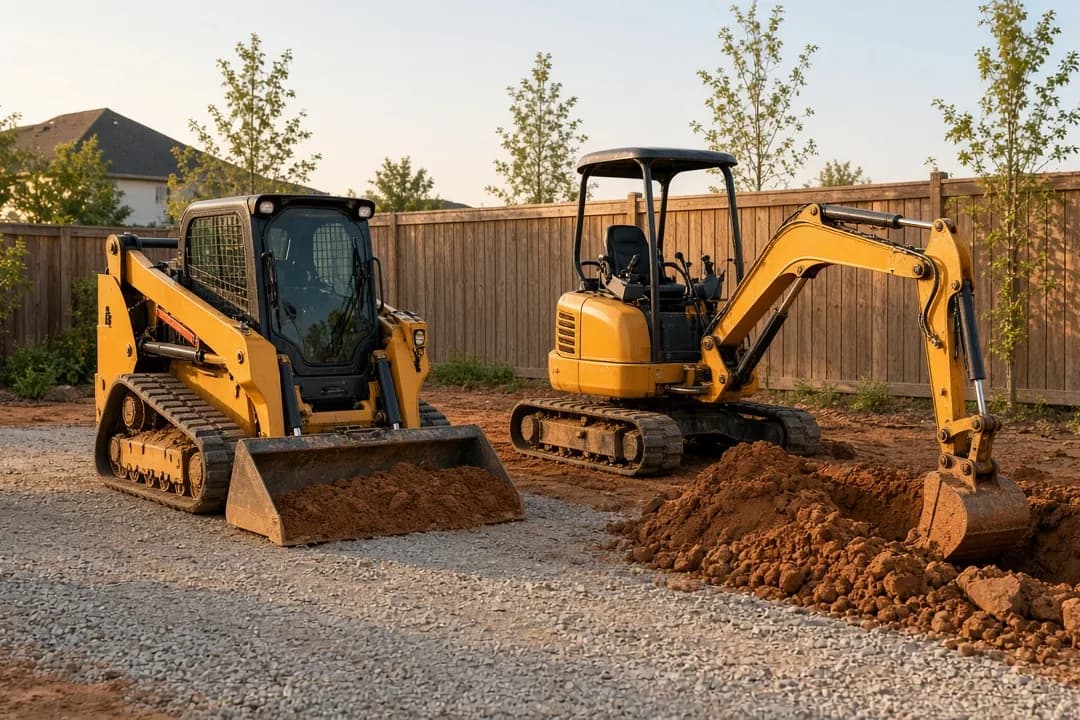
A mini excavator, also called a compact excavator, is a tracked digging machine whose upper structure (cab, boom, arm and bucket) rotates on its undercarriage. It digs by pulling the bucket toward itself, so it can work below the level it sits on and swing each load to a pile or truck without moving. Most carry a front blade; John Deere notes the backfill blade on its 35 P-Tier can level and backfill trenches, and can clamp and carry pipe or rocks together with the bucket.
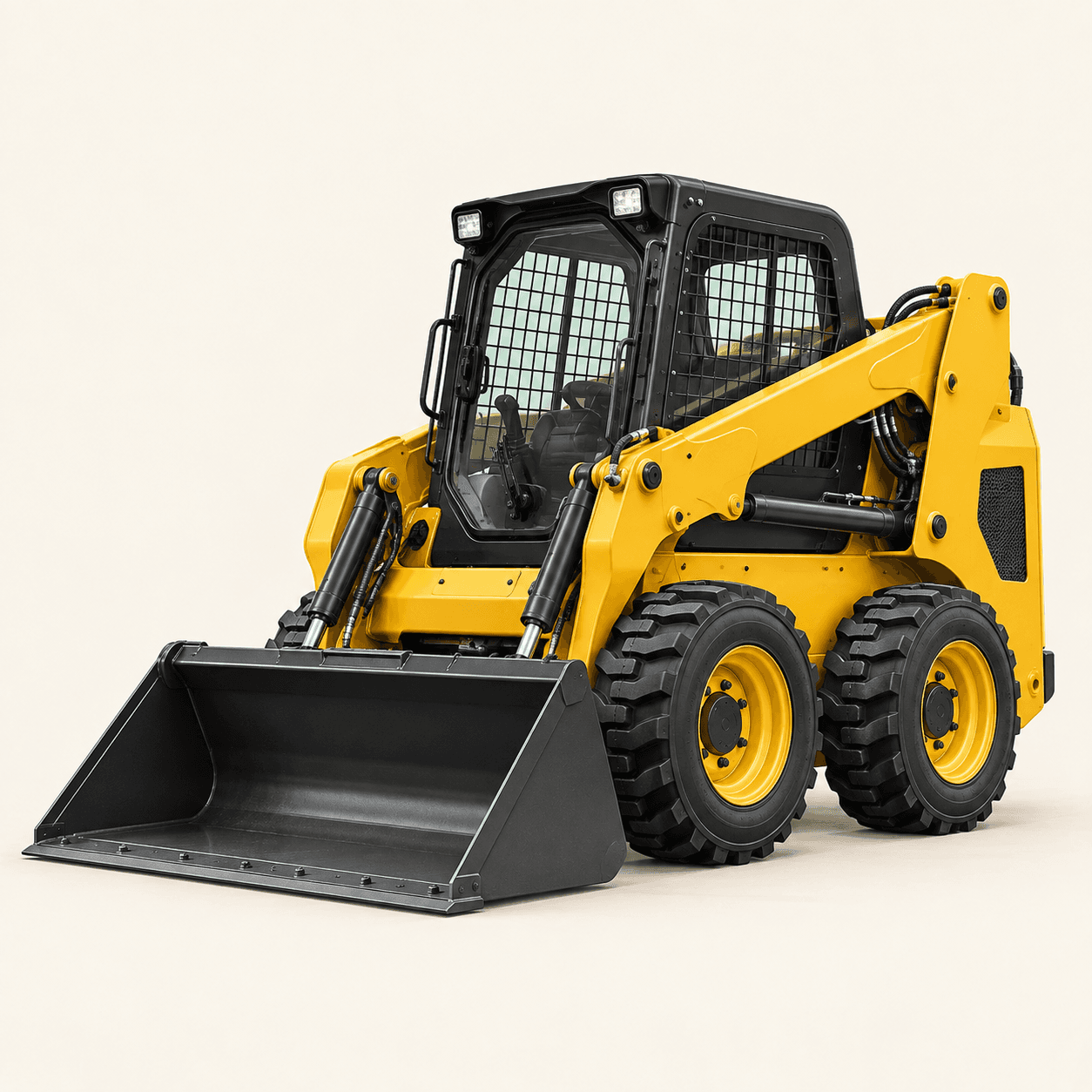
A skid steer is a compact, rigid-frame loader on four wheels that steers by driving the wheels on each side at different speeds. Its lift arms raise a bucket, forks or another attachment in front of the operator. A compact track loader (CTL) is the same idea on rubber tracks. Both are built to push, lift, carry and load rather than to dig deep.
So the numbers to compare are different. A mini excavator is sized by dig depth, reach and breakout force; a loader by rated operating capacity, lift height and the hydraulic flow available for attachments.
Sources
What Each Machine Is Best For
Best for: Mini excavator
- Utility, water, sewer and irrigation trenches, especially deeper or tighter ones
- Footings and foundation trenches
- Drainage work, French drains and dry wells
- Careful digging near existing utilities and structures
- Stumps, roots and light demolition with a thumb or breaker
- Backfilling and rough leveling with the blade
Best for: Skid steer or compact track loader
- Rough and finish grading
- Spreading gravel, base, topsoil and mulch
- Moving spoil and debris around the site and loading trucks
- Clearing brush and general site cleanup
- Moving pallets with forks
- Running powered attachments such as augers, trenchers, breakers, brush cutters and cold planers
Neither fits everything. A long, narrow run of irrigation line or conduit may suit a trencher, and deep excavations or truck loading on a large site call for a full-size excavator. For big stockpiles and truck loading on large sites, consider a wheel loader.
Sources
Compare the Specs: Illustrative Examples
These published specs for a few representative models are illustrative, not a ranking. Figures change with cab, arm, tracks and counterweight, so confirm the exact machine with your provider.
| Model | Operating weight | Max dig depth | Bucket breakout | Width |
|---|---|---|---|---|
| Kubota U17-5 (zero tail swing) | 3,902 lb | 7 ft 6.2 in | 3,547 lbf | 3 ft 3.4 in to 4 ft 3.2 in (variable) |
| John Deere 35 P-Tier (zero tail swing) | 8,135 lb | 10 ft 0 in | 6,085 lbf | 5 ft 9 in |
| John Deere 60 P-Tier | 13,620 lb | 12 ft 4 in | 9,240 lbf | 6 ft 7 in |
| Model | Operating weight | Rated operating capacity | Tipping load | Width (no bucket) | Hinge pin height |
|---|---|---|---|---|---|
| John Deere 318 P-Tier skid steer (vertical lift) | 6,542 lb | 1,945 lb | 3,890 lb | 62.9 in | 120 in |
| John Deere 334 P-Tier skid steer (vertical lift) | 10,264 lb | 4,000 lb (with standard counterweight set) | 8,000 lb | 78.5 in | 132 in |
| John Deere 317 P-Tier track loader (vertical lift) | 8,423 lb | 2,125 lb | 6,070 lb | 65.1 in | 121 in |
| Kubota SVL75-3 track loader (vertical lift) | 9,190 lb (open cab) | 2,490 lb at 35% of tipping load; 3,557 lb at 50% | 7,112 lb | 65.9 in (standard track) | 122.7 in |
Two patterns stand out. The smallest mini excavator here narrows to about 3 ft 3 in, slimmer than any loader in the table, so it can reach side yards and gates a loader can't. And the loaders weigh roughly 6,500 to 10,300 lb before attachments, which matters for trailers, turf and finished surfaces.
Reading Loader Capacity: ROC and Tipping Load
A loader's rated operating capacity (ROC) is the load it's rated to handle in normal operation, set as a fraction of its tipping load. In Deere's published figures, the 318 P-Tier skid steer's ROC is half its tipping load (1,945 of 3,890 lb), while the 317 P-Tier compact track loader's is 35% (2,125 of 6,070 lb).
That difference trips people up. Kubota lists its SVL75-3 track loader at 2,490 lb of ROC at 35% of tipping load and 3,557 lb at 50%. When you compare a skid steer with a track loader, or one brand with another, check which basis each number uses.
Material weight matters too: wet clay or a pallet of block weighs far more than mulch. Ask for the machine's capacity with the attachment you plan to use.
Access, Ground and Surfaces
Measure the narrowest point on the route to the work, such as a gate, side yard or gap between a house and a fence, before you choose. Kubota's U17-5 retracts its undercarriage to about 3 ft 3 in for narrow passages and widens to 4 ft 3.2 in for stability, and Deere says its 316 and 318 P-Tier skid steers are under 63 in wide.
Tracks spread a machine's weight, and wider tracks spread it further. Kubota lists the SVL75-3's ground pressure at 5.8 psi on standard 12.6 in tracks and 4.7 psi on 15.8 in wide tracks (open cab). The Deere 35 P-Tier mini excavator is listed at 4.8 psi on rubber tracks with a cab. On pavement and firm, dry ground, a wheeled skid steer is worth considering, and it travels faster: Deere's two-speed option on the 316 and 318 P-Tier reaches 10.1 mph.
Clay changes the plan. USDA describes the Blackland Prairie's Houston Black clay, found from north of Dallas to San Antonio, as having very high shrink-swell potential and being very sticky and very plastic when wet, and the National Weather Service notes that spring and fall are the wettest seasons in Dallas–Fort Worth. On wet clay, ask for tracks or wide tracks, and plan mats or plywood wherever a machine crosses lawn, pavers or a driveway.
When You Need Both
Plenty of jobs use both. On a footing or utility job, the mini excavator digs and sets spoil aside, then the loader hauls it away, brings in base or backfill and cleans up. On a tight site, renting them back to back keeps only one machine in the way at a time.
The machines don't substitute well for each other. A skid steer can't reach below itself the way an excavator can, and a mini excavator is slow at moving material any distance: Deere lists the 35 P-Tier's top travel speed at 2.7 mph, against up to 10.1 mph for its two-speed 316 and 318 P-Tier skid steers. Loaders can run trencher and auger attachments for some digging; ask which attachments the machine's hydraulics support.
Safety Basics for Either Machine
- Call before you dig. Texas law requires notice to the one-call system at least 48 hours before excavating, not counting weekends and legal holidays; call 811 or submit a ticket online with Texas811. OSHA also requires the estimated location of underground utilities to be determined before an excavation is opened, and the exact location to be found by safe means as digging gets close.
- Protect trenches. OSHA requires a protective system, such as sloping, shoring or a trench box, for excavations 5 feet deep or more unless they're entirely in stable rock. Shallower trenches need one too unless a competent person finds no sign of a potential cave-in. Trenches 4 feet or deeper need a ladder, stairway or ramp within 25 feet of lateral travel, and spoil has to stay at least 2 feet from the edge.
- Keep people clear. No one may stand under loads handled by lifting or digging equipment, and when an operator can't clearly see the edge of an excavation, OSHA requires a warning system such as barricades, signals or stop logs.
- Belt in and back up carefully. OSHA requires seat belts on construction earthmoving equipment such as loaders, and a reverse alarm or a signal person when a machine's view to the rear is obstructed.
- Park it down. Loader buckets must be fully lowered or blocked when not in use or under repair.
Read the operator's manual and ask for a walkaround at delivery. This summary doesn't replace the regulations or your site's safety plan.
Planning a DFW Project
The choice plays out differently across Dallas–Fort Worth. In Plano, the City's comprehensive plan FAQ says only about 6% of land is still available for development, so much of the work is redevelopment on established lots, where a narrow mini excavator and a compact loader fit better than larger machines. Around McKinney's historic downtown, the City's plan describes infill and adaptive reuse in a largely developed core, which suits the same compact pairing.
Check utility rules before either machine digs in the right-of-way. Frisco requires separate City line locates, outside the 811 process, for digging deeper than 18 inches in City right-of-way or easements. Arlington takes its own City locate requests at least two working days ahead and doesn't mark private services, and Irving's right-of-way rules make it City policy not to cut streets or sidewalks. Each city page has the details and sources.
Specifications are taken from manufacturers' published materials and can change. This guide is general information. Always follow the manufacturer's instructions, your rental provider's requirements and your jobsite's safety rules.