Match the Machine to the Space
Best for: Rammer
- Narrow trenches and bore pits
- Around pipes, structures and footings
- Cohesive soils in tight spots
- Slow coverage, high impact on a small shoe
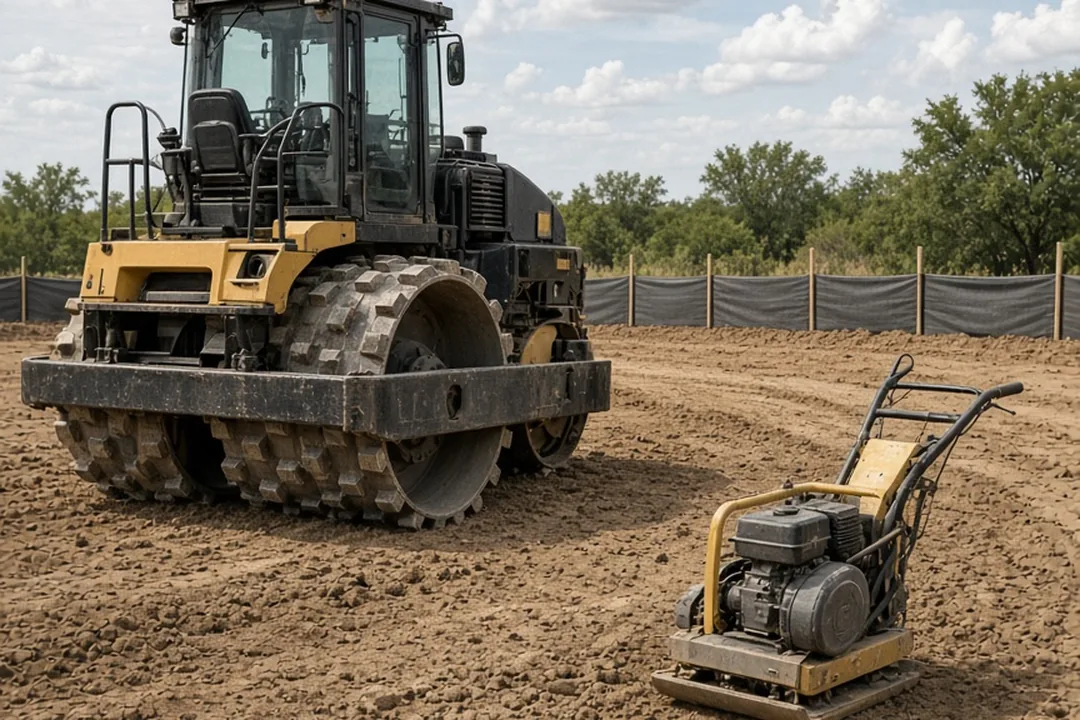
Best for: Vibratory plate
- Wider trenches and small pads
- Base and patch work in confined areas
- Granular and mixed soils on flat ground
- Much higher area coverage than a rammer
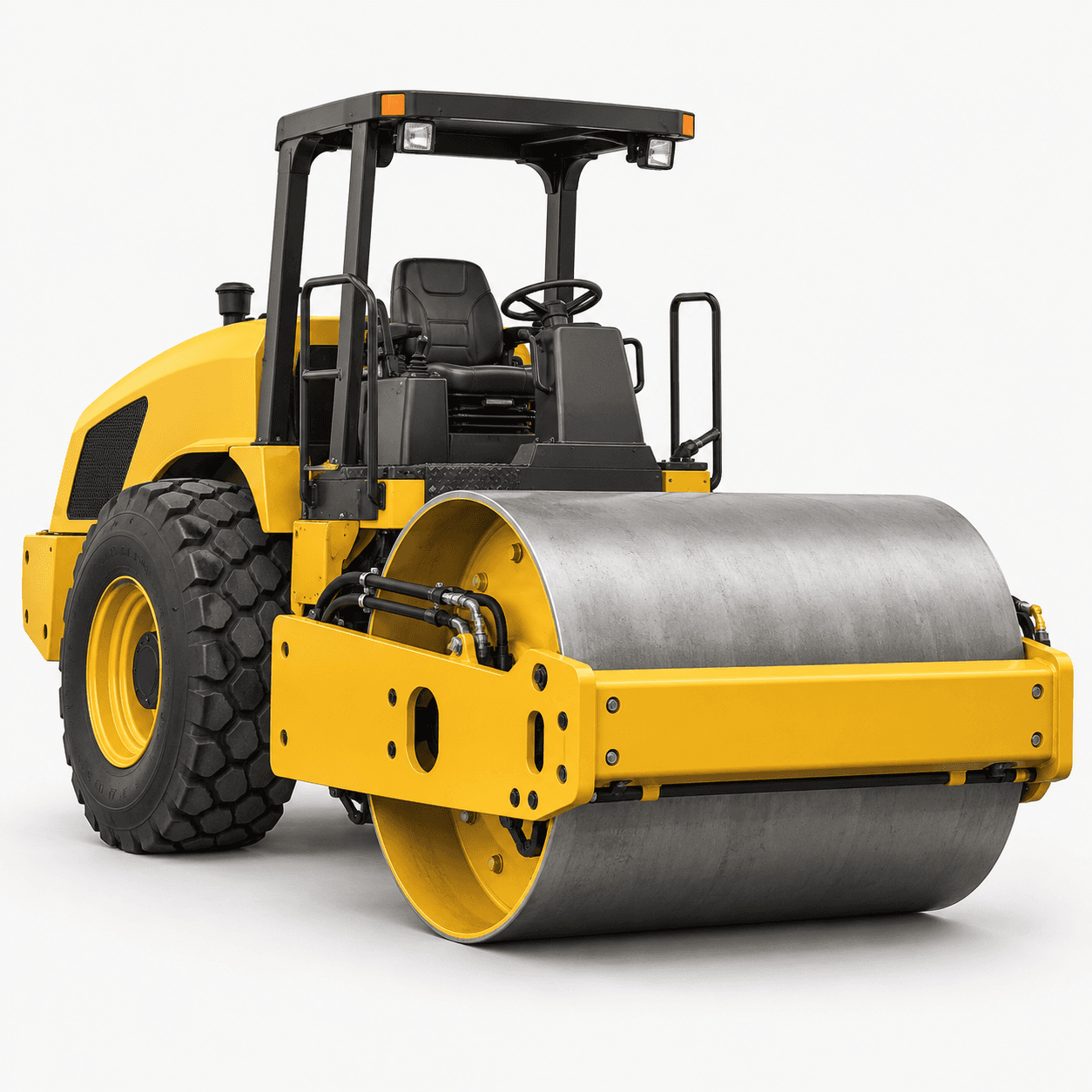
Best for: Single-drum roller
- Building pads, streets and parking subgrade
- Smooth drum for granular soils
- Padfoot drum for highly cohesive clay
- Needs room to turn and stage
Cities often specify both density and lift thickness. Rockwall fill instructions call for compaction to 95% density with a sheepsfoot roller in 8- to 12-inch lifts; Coppell may require density tests in trench lines at the applicant's expense. Bring the spec to the provider, not just the machine name.
Size Classes from Published Specs
| Example | Type | Weight | Force / power | Width | Area capacity |
|---|---|---|---|---|---|
| Wacker Neuson BS60-4As 11in | Rammer | 72 kg (about 159 lb) | 18.0 kN impact (about 4,050 lbf); 656 blows/min | 280 mm shoe (about 11 in) | 148 m²/h (about 1,600 sq ft/h) |
| Wacker Neuson WP1550A | Vibratory plate | 198.4 lb | 3,372 lbf centrifugal | 19.7 × 22.9 in plate | 9,365 sq ft/h |
| BOMAG BW 211 D-5 SL | Single-drum roller | 10,630 kg (about 23,400 lb) | 82 kW engine | 2,130 mm (about 84 in) | Not listed as area/hour |
Rammers deliver hard, rapid blows through a small shoe. Plates vibrate a wider base and cover far more ground per hour; Wacker describes its single-direction plates as suited to tight corners and confined areas. Rollers take over when the pad or street is too large for walk-behind equipment.
Clay Soils and Drum Type
BOMAG describes smooth-drum single-drum rollers as ideal for sand, gravel, crushed rock and weakly cohesive soils, and padfoot models as designed for highly cohesive soils. A padfoot segment kit can convert the BW 211 D-5 SL smooth drum when the soil demands it.
Much of North Texas sits on Blackland Prairie clay. USDA describes Houston Black as very sticky and very plastic when wet, with very high shrink-swell potential. NWS Fort Worth notes spring and fall as the wettest seasons, so a pad that compacted cleanly on a dry afternoon can fail density tests after rain.
Moisture conditioning is part of the rental plan. If the geotechnical report sets a moisture window, you may need water trucks or drying time—not a bigger roller. For trench work deeper than a few feet, pair compaction with trench safety basics.
Trenches, Pads and City Specs
- Trenches: rammer first when the trench is narrow; switch to a plate when the trench widens and the pipe is bedded.
- Keep spoil and the machine far enough from the edge to meet OSHA's 2-foot rule unless retaining devices are used.
- Pads and subgrade: rollers for production; plates for edges, returns and around structures the roller cannot reach.
- Ask whether the City requires density tests, and who pays for them, before backfill starts.
- Erosion controls and construction entrances often go in before the first lift—see local grading rules on city pages such as The Colony and Bedford.
Before You Rent
- Soil type and whether the fill is cohesive clay, granular or mixed.
- Lift thickness and density required by the plans or City notes.
- Trench width, pad size and access for a walk-behind versus a roller.
- Whether density testing is required and who schedules it.
- Moisture conditioning: water available on site, or drying time after rain.
For the machines that move the dirt before you compact it, see site preparation equipment and what size excavator do I need.
Specifications are taken from manufacturers' published materials and can change. This guide is general information. Always follow the manufacturer's instructions, your rental provider's requirements and your jobsite's safety rules.