Excavator Size Classes
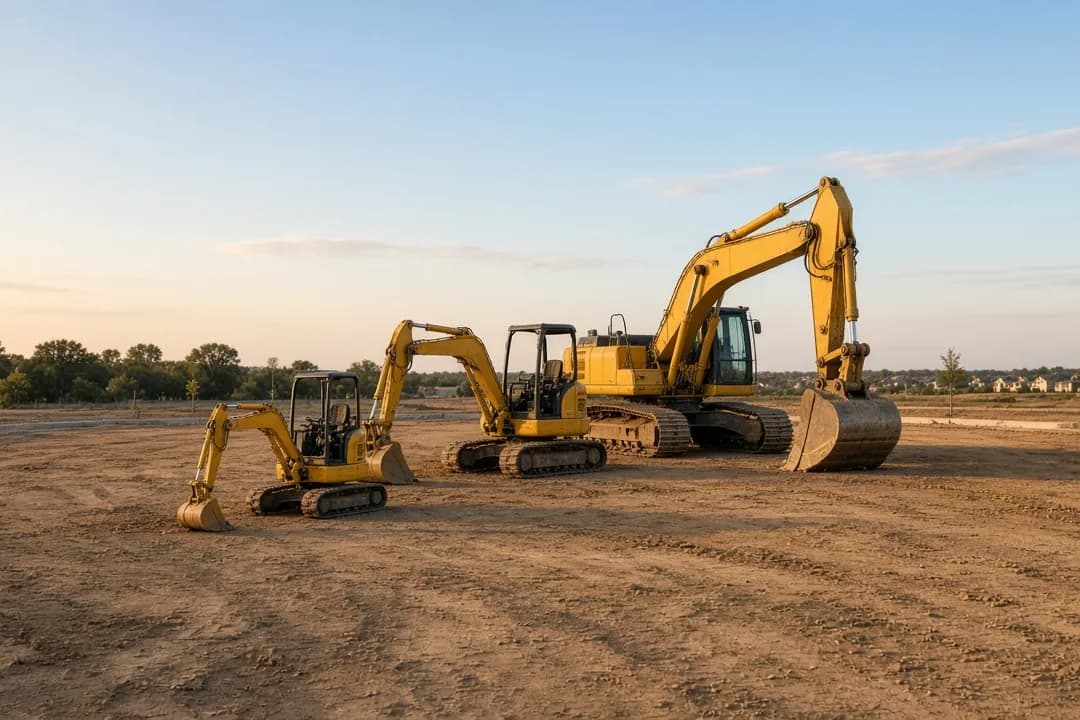
There's no single industry definition of excavator classes, and manufacturers group their lines differently. A John Deere article gives its compact excavator line as 3,790 to 13,620 lb, and Deere lists its next group, starting with the 75 P-Tier, as mid-size excavators. The classes below are a practical shorthand; their weight ranges come from this guide's example machines and are illustrative, not standard categories.
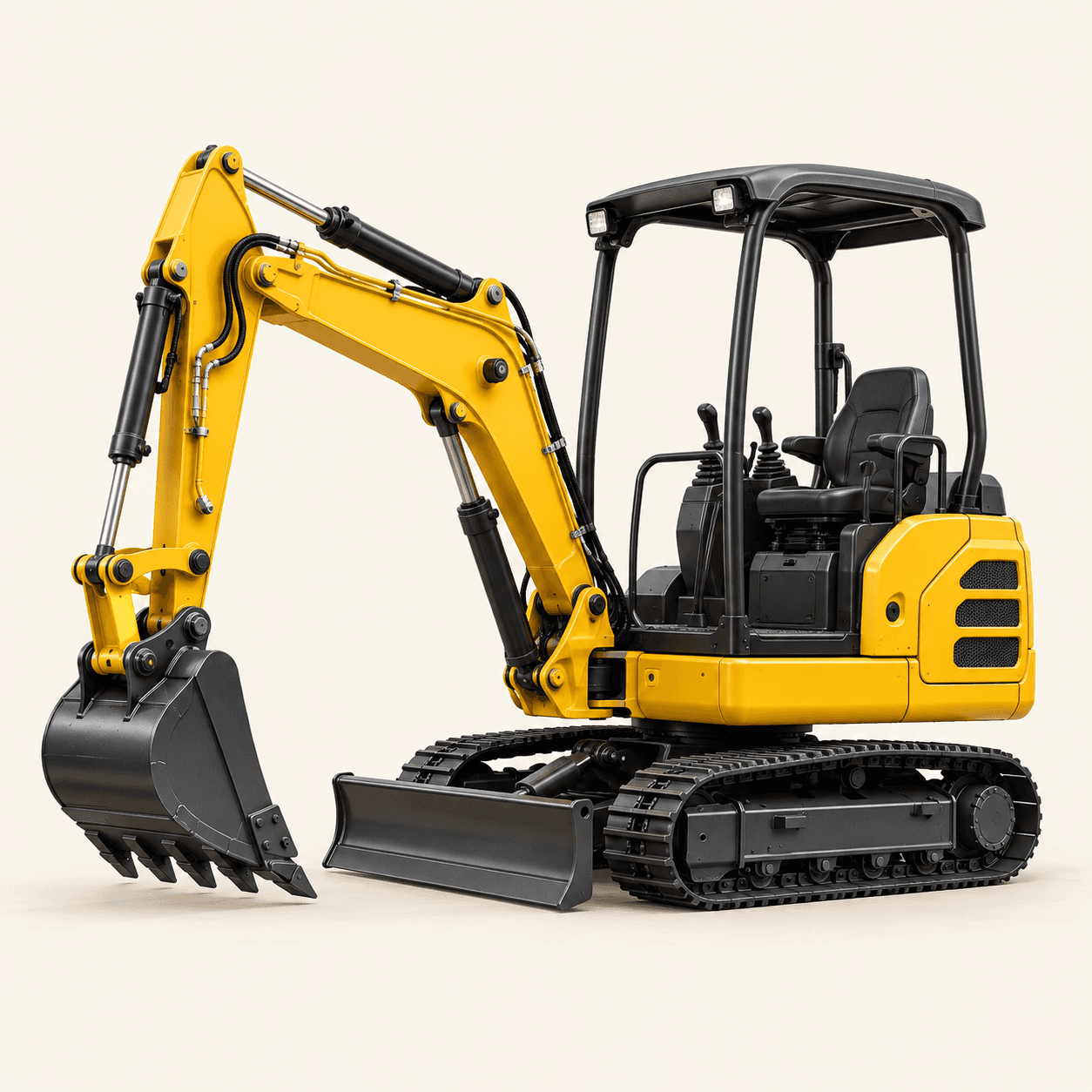
- Compact or mini (about 3,900 to 13,600 lb here): residential work, utilities, landscaping, footings and drainage, often with zero or reduced tail swing.
- Midi (about 18,500 to 20,300 lb here): larger utility trenches, small pads and site work where a compact machine is undersized.
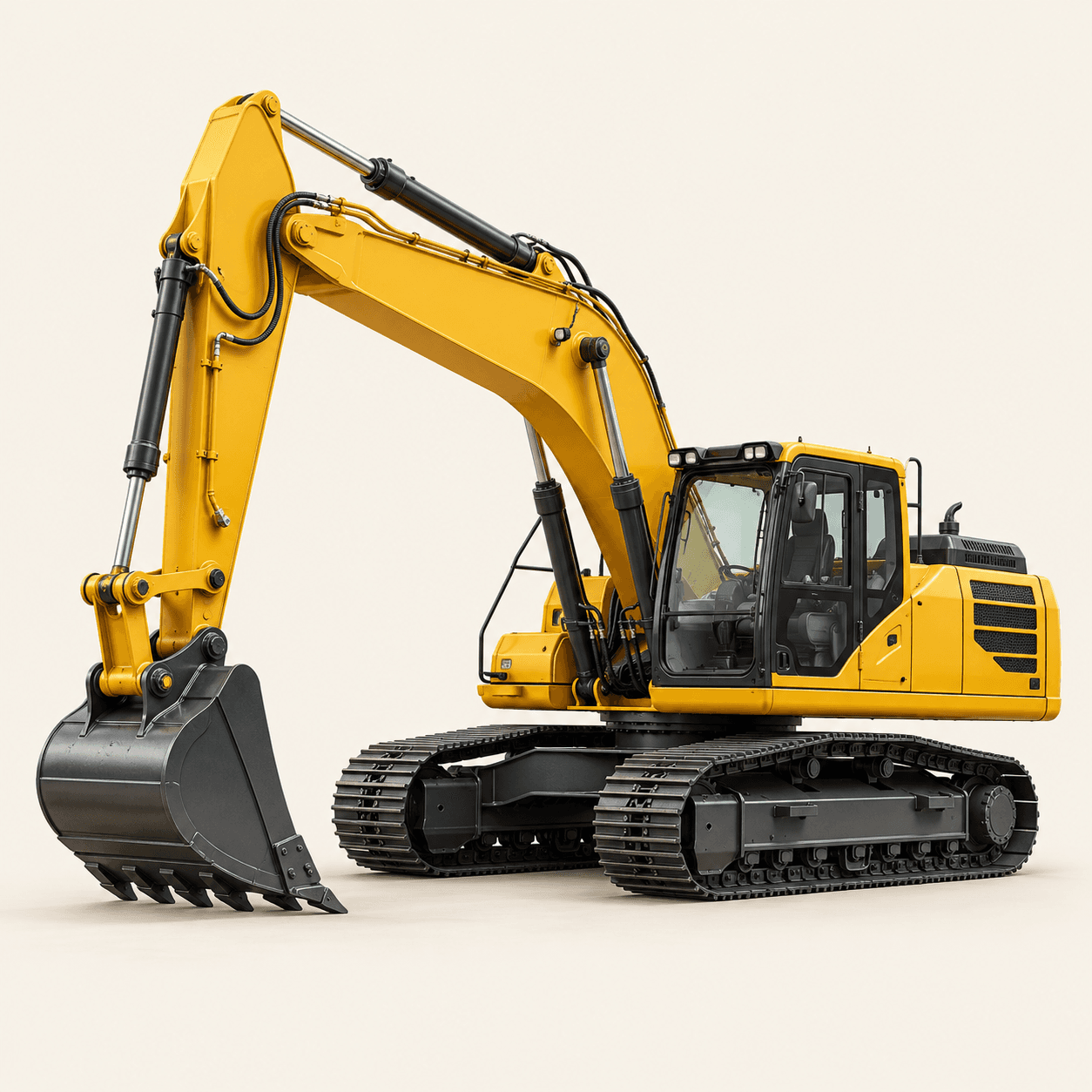
- Standard (about 31,500 to 81,000 lb here): mass excavation, deep sewer and storm drain, detention ponds and truck loading.
| Model | Class | Operating weight | Max dig depth | Bucket breakout | Width | Tail swing radius |
|---|---|---|---|---|---|---|
| Kubota U17-5 | Compact | 3,902 lb | 7 ft 6.2 in | 3,547 lbf | 3 ft 3.4 in to 4 ft 3.2 in | Zero tail swing |
| John Deere 35 P-Tier | Compact | 8,135 lb | 10 ft 0 in | 6,085 lbf | 5 ft 9 in | 2 ft 10 in (zero tail swing) |
| John Deere 60 P-Tier | Compact | 13,620 lb | 12 ft 4 in | 9,240 lbf | 6 ft 7 in | 4 ft 3 in |
| John Deere 75 P-Tier | Midi | 18,559–19,326 lb | 15 ft 3 in | 13,264 lbf | 8 ft 1 in | 4 ft 7 in |
| John Deere 85 P-Tier | Midi | 19,238–20,296 lb | 14 ft 10 in | 13,264 lbf | 8 ft 1 in | 5 ft 3 in |
| John Deere 135 P-Tier | Standard (reduced tail swing) | 31,526–33,951 lb | 19 ft 8 in | 23,380 lbf | 8 ft 6 in | 4 ft 11 in |
| John Deere 210 P-Tier | Standard | 49,380–51,370 lb | 21 ft 10 in | 36,644 lbf | 10 ft 5 in | 9 ft 5 in |
| John Deere 350 P-Tier | Standard | 80,985 lb | 24 ft 3 in (up to 26 ft 10 in by configuration) | 55,303 lbf | 11 ft 1 in | 11 ft 10 in |
Start With Dig Depth and Reach
Maximum dig depth is the deepest point the bucket can reach with the machine on level ground, and it's the first number to check. Work out the deepest point of the job, including pipe bedding or the bottom of a footing, and pick a machine whose published depth clears it with room to spare.
A flat-bottomed trench is shallower than that maximum point: Deere lists the 210 P-Tier at 21 ft 10 in of maximum depth but 21 ft 2 in for an 8 ft flat bottom. Also check dump height against the truck bed or spoil pile; Deere's 35 P-Tier, for example, dumps at 10 ft 10 in.
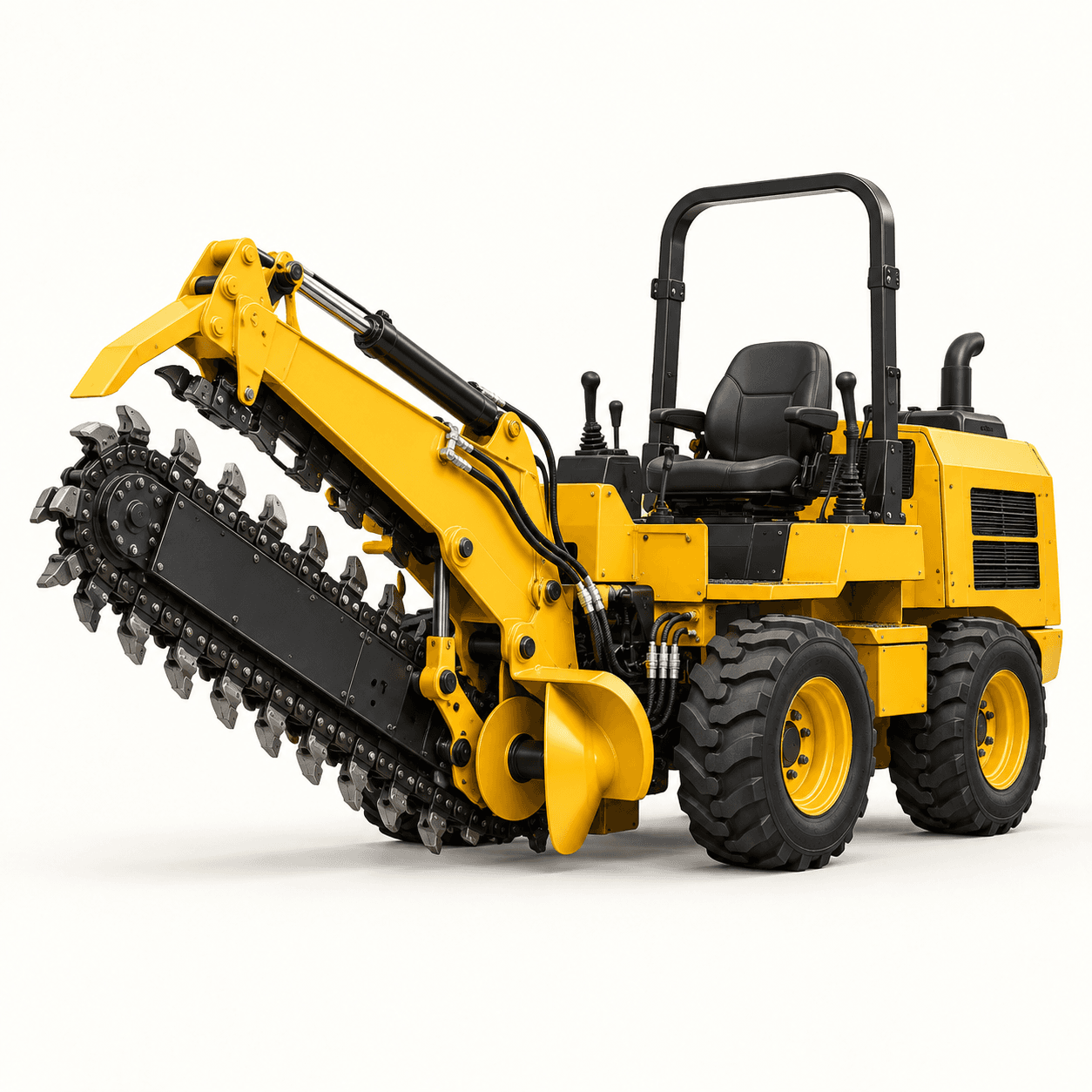
In the table, compact machines dig to about 7.5 to 12 feet, the midi to about 15 feet and the standard machines to about 20 feet or more. For long, shallow runs of irrigation, conduit or small water line, a trencher may be the better tool, cutting a consistent narrow trench with less spoil to handle.
Breakout Force and Buckets
Bucket breakout force is the digging force the bucket can exert at its cutting edge. In the table it climbs from about 3,500 lbf on the smallest compact machine to about 55,000 lbf on the largest standard one.
Breakout matters most in hard digging: compacted fill, dense dry clay, old foundations and roots. If the ground is tough, consider stepping up a size or adding a ripper tooth or breaker attachment. Bucket width should follow the trench, with narrow trenching buckets for utility lines and wider buckets for general digging and loading. Ask which buckets come with the machine and whether a quick coupler or hydraulic thumb is available.
Width, Tail Swing and Working Space
Compare the machine's width with the narrowest point on the route to the work. Kubota's U17-5 retracts to about 3 ft 3 in for narrow passages and widens to about 4 ft 3 in for stability, while Deere's 35 P-Tier is 5 ft 9 in wide and its 210 P-Tier measures 10 ft 5 in over the undercarriage. Look up as well: power lines, tree limbs and eaves all limit where a boom can work.
Tail swing is how far the back of the upper structure sweeps past the tracks as the machine rotates. Zero-tail-swing designs like the Kubota U17-5 and Deere 35 P-Tier keep it within the track width, which Deere says helps in tight urban and residential spaces. Conventional machines need clear space behind them: the Deere 210 P-Tier's tail swing radius is 9 ft 5 in, against 4 ft 11 in for the reduced-tail-swing 135 P-Tier.
On tight lots, plan where the machine will dig, swing and dump without striking a wall, fence or neighboring property, and keep spoil at least 2 feet back from the trench edge, as OSHA requires.
Weight, Ground and Surfaces
Operating weight shapes how a machine handles soft ground, turf and slabs; the Deere 35 P-Tier, for example, is listed at 4.8 psi of ground pressure on rubber tracks with a cab. Rubber tracks are easier on finished surfaces than steel, but use mats or plywood over concrete, pavers and lawn.
North Texas clay needs extra planning. USDA describes the Houston Black clay of the Blackland Prairie, which runs from north of Dallas to San Antonio, as having very high shrink-swell potential and being very sticky and very plastic when wet. The National Weather Service notes spring and fall are the wettest seasons in Dallas–Fort Worth. Check your parcel in the USDA Web Soil Survey and your geotechnical report, and build weather days into the schedule.
Getting the Machine to the Site
Delivery is part of sizing. The lightest compact excavators weigh under 4,000 lb (the Kubota U17-5 is 3,902 lb), but the truck, trailer, hitch and tie-downs all have to be rated for the machine plus attachments. Larger excavators travel on a truck and lowboy trailer, and the widest are oversize loads: Texas limits most vehicles and loads to 8 ft 6 in wide, so a machine like the Deere 210 P-Tier, at 10 ft 5 in, needs a TxDMV oversize permit to travel on public roads.
Ask the provider where the truck will unload and how much room the machine needs to walk off the trailer; narrow streets and overhead lines can limit both.
Trench Safety at Every Size
- Locate utilities first. Texas law requires notice to the one-call system at least 48 hours before excavating, not counting weekends and legal holidays; call 811 or submit a ticket online. OSHA requires the estimated location of underground installations to be determined before an excavation is opened, and the exact location to be found by safe means as digging approaches it.
- Plan protection by depth. OSHA requires a protective system, such as sloping, benching, shoring or a trench box, for excavations 5 feet or deeper unless they're entirely in stable rock, and for shallower ones unless a competent person finds no sign of a potential cave-in. Trenches 20 feet or deeper need a protective system designed by, or based on tabulated data approved by, a registered professional engineer.
- Provide a way out. Trenches 4 feet or deeper need a ladder, stairway or ramp within 25 feet of lateral travel.
- Keep loads and spoil back. Spoil and equipment must stay at least 2 feet from the edge, no one may stand under loads handled by digging equipment, and a competent person must inspect the excavation daily and after every rainstorm.
- Lift by the chart. If you'll lift pipe or other loads with the excavator, use the machine's lift capacity chart. Kubota notes its U17-5 lift ratings follow ISO 10567, don't exceed 75% of static tipping load or 87% of hydraulic lifting capacity, and don't include the bucket or rigging.
This summary doesn't replace the regulations or your site's safety plan.
Matching Size to Common Jobs
| Job | Class to start with | What to check |
|---|---|---|
| Irrigation, drainage and landscaping on a residential lot | Compact | Narrowest access, turf protection, trencher for long shallow runs |
| Footings and small foundations | Compact | Footing depth and width, and space to set spoil |
| Water and sewer service connections | Compact or midi | Depth to the main, right-of-way permits and locates |
| Subdivision utilities and storm drain | Midi or standard | Depth, trench box size and truck loading |
| Mass grading, detention ponds and building pads | Standard | Truck loading height, ground conditions and haul routes |
Treat these as starting points; depth, access and soil decide the final size. Plan backfill and compaction equipment along with the excavator.
Sizing for DFW Sites
Site type shapes size across the Metroplex. Frisco's comprehensive plan says roughly 13% of the city is still undeveloped, so much of the work there is grading, utilities and building pads suited to midi and standard excavators. In Plano, with only about 6% of land left to develop, redevelopment on established lots tends to call for compact, zero-tail-swing machines. McKinney has both: infill around its historic downtown and new construction toward its edges.
Check local rules before any size digs in a public right-of-way. McKinney's right-of-way manual requires a trench safety plan for excavations deeper than 5 feet. Arlington takes its own City locate requests at least two working days ahead, and Irving's right-of-way rules make it City policy not to cut streets or sidewalks. Each city page has the details and sources.
Sources
- City of Frisco 2040 Comprehensive Plan, Chapter 2: Land Use
- City of Plano, Plano Tomorrow comprehensive plan FAQ
- ONE McKinney 2040, Town Center District strategy
- City of McKinney Right-of-Way Construction and Permitting Procedures Manual (effective July 1, 2025)
- City of Arlington Public Right-of-Way Permitting and Construction Manual (2026)
- City of Irving Code, Right-of-Way Management
Specifications are taken from manufacturers' published materials and can change. This guide is general information. Always follow the manufacturer's instructions, your rental provider's requirements and your jobsite's safety rules.