Read the Ratings: Maximum, Rated, Prime and Standby
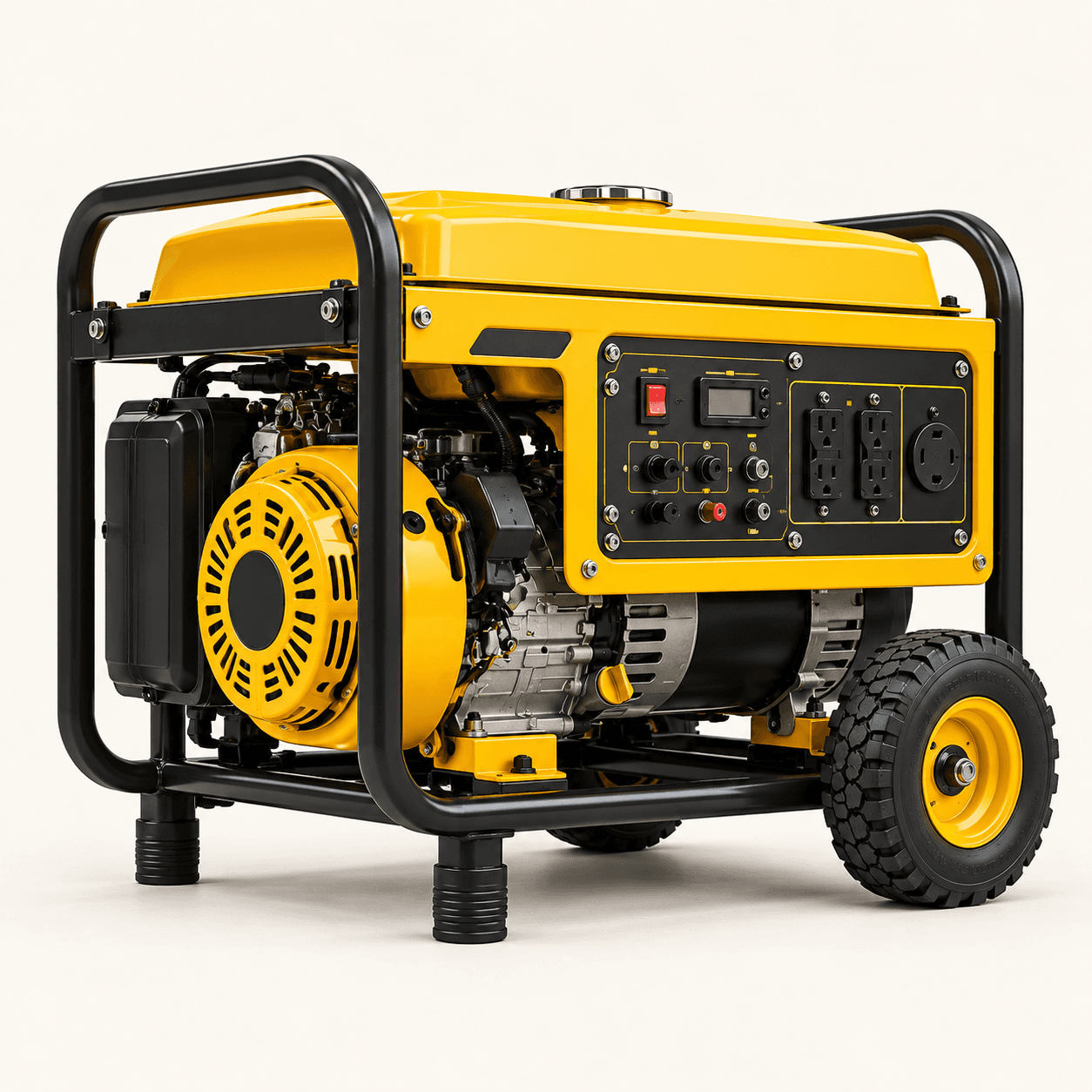
Portable generators usually list two outputs. Honda's EU7000iS, for example, is listed at 7,000 W maximum and 5,500 W rated at 120/240 V. Plan the steady load against the rated figure rather than the maximum.
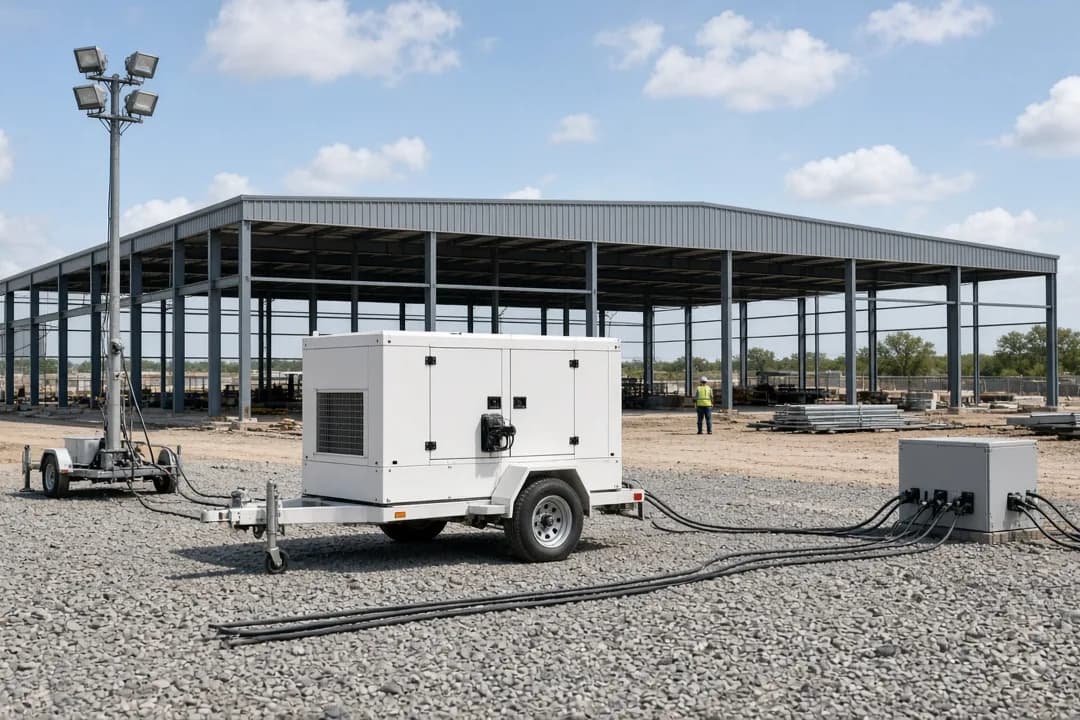
Towable diesel units use prime and standby ratings instead. Generac Mobile's MDG25IF4 is rated 20 kW / 25 kVA prime and 25 kW / 31 kVA standby; the MDG75DF4 is rated 60 kW / 75 kVA prime and 68 kW / 85 kVA standby. Generac defines standby as serving a varying emergency load for the duration of a utility outage, and prime as supplying a varying load in lieu of utility power for an unlimited amount of running time. A jobsite running all day on generator power is a prime application.
kW is real power; kVA includes the effect of the load's power factor. Spec sheets list both because motor-heavy loads use more of a generator's capacity than their kW alone suggests.
Total the Load
List everything that will run at the same time: saws, drills, compressors, pumps, lighting, heaters or fans, site office equipment and battery chargers. Use the nameplate on each item. When the nameplate gives amps instead of watts, multiply amps by the circuit voltage (for example, a 120-volt tool at 10 amps draws about 1,200 watts).
- Add the running loads that overlap. Equipment that never runs together does not need to be added together.
- Allow for motor starting. Compressors, pumps and other motor loads draw more current for a moment when they start; check the equipment manufacturer's starting requirement and stagger starts where possible.
- Check voltage and phase. Small portables supply 120 V and 120/240 V single-phase; towable units such as the MDG25IF4 add a voltage selection switch and connection lugs.
- Leave headroom so the generator is not running at its limit. OSHA warns that overloading a generator can lead to overheating and fire.
Size Classes from Published Specs
| Example | Output | Fuel and runtime | Receptacles | Typical fit |
|---|---|---|---|---|
| Honda EU7000iS (portable inverter) | 5,500 W rated, 7,000 W max; 120/240 V | 5.1 gal; 6.4 h at rated load, 16 h at 1/4 load | Two 20 A 120 V GFCI duplexes, 30 A 125 V and 30 A 125/250 V locking | Hand tools, small crews, lighting, sensitive electronics |
| Generac Mobile MDG25IF4 (towable diesel) | 20 kW / 25 kVA prime; 25 kW / 31 kVA standby | 56 gal usable; 35 h at 75% load | Two 120 V 20 A GFCI duplexes, three 120/240 V 50 A twist-lock, lugs | Site trailers, multiple trades, small pumps and compressors |
| Generac Mobile MDG75DF4 (towable diesel) | 60 kW / 75 kVA prime; 68 kW / 85 kVA standby | Up to 39 h at 75% load (standard tank) | Two 120 V 20 A GFCI duplexes, three 120/240 V 50 A twist-lock, lugs | Larger commercial sites, temporary distribution panels, bigger motor loads |
Runtime figures assume a stated load. Honda lists 6.4 hours at rated load and 16 hours at a quarter load on one 5.1-gallon tank; Generac lists the MDG25IF4 at 35 hours on 56 usable gallons at 75% load. Plan refueling around the real load, not the best-case number.
OSHA Rules for Generator Power on Construction Sites
On construction sites, all 120-volt, single-phase, 15- and 20-amp receptacles that aren't part of a building's permanent wiring and are in use by employees need GFCI protection, unless the employer runs an assured equipment grounding conductor program instead. Receptacles on a two-wire, single-phase portable or vehicle-mounted generator rated not more than 5 kW, with circuit conductors insulated from the frame, are exempt from the GFCI requirement.
The frame of a portable generator need not be grounded, and may serve as the grounding electrode, when it supplies only equipment mounted on it or cord-and-plug equipment through its own receptacles, and the receptacle grounding terminals are bonded to the frame. Feeding a temporary distribution system is a different case; plan that with a qualified electrician.
- Never connect a generator to a building's electrical system without a transfer switch installed by a qualified electrician. Back-feeding can energize lines far from the site.
- Use grounded, undamaged cords rated for the load.
- Keep generators dry, or under a canopy in rain.
Placement, Carbon Monoxide, Fuel and Noise
OSHA warns that carbon monoxide from generator exhaust is colorless and odorless. Never run a generator indoors or in enclosed spaces such as garages, crawl spaces and basements; open doors and windows may not prevent buildup. Keep 3 to 4 feet of clear space on all sides and above the unit, and keep it away from doors, windows and vents of occupied spaces.
Shut the generator down and let it cool before refueling, store fuel in approved containers away from the generator, and keep units as far as possible from work areas to limit noise and vibration exposure.
Local rules can also shape where and when generators run. Carrollton treats engine-generators running from 10 p.m. to 7 a.m. as unlawful noise, with an affirmative defense during power outages. Rockwall includes fueling and servicing of construction equipment within its construction hours. On occupied commercial sites in Arlington and building-upgrade work in Richardson, placement away from entries and air intakes matters as much as size.
What to Tell the Provider
- Your load list with nameplate watts or amps, which items run together, and any large motor starts.
- Voltage and phase needed, plus any receptacles, distribution panel or lug connections.
- Hours of operation per day and how you plan to refuel; ask about larger tanks or fuel service for long runs.
- Where the unit will sit, how it will be delivered (pickup tow or truck) and any noise limits near homes.
See also the equipment rental checklist for delivery and site details, and short-term vs long-term rentals when temporary power will stay for weeks.
Specifications are taken from manufacturers' published materials and can change. This guide is general information. Always follow the manufacturer's instructions, your rental provider's requirements and your jobsite's safety rules.